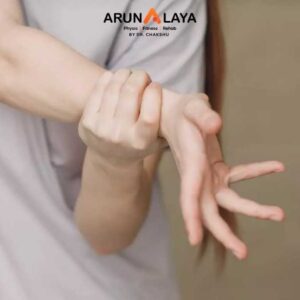
Physiotherapy, often in conjunction with other treatments like botulinum toxin injections or oral medications, plays a vital role in managing focal dystonia. The goal is to reduce symptoms, improve motor control, restore function, and enhance quality of life. Advanced physiotherapy approaches often focus on principles of motor learning, sensory re-education, and adaptation.
- Sensory Re-education and Retraining:
- Mechanism: This approach targets the abnormal sensory processing believed to contribute to dystonia. It involves exercises designed to improve the brain’s ability to interpret sensory input from the affected area, aiming to “rewire” the cortical maps.
- Application:
- Discriminative Sensory Training: Exercises involve distinguishing between different textures, temperatures, or pressure points on the skin.
- Proprioceptive Retraining: Activities that challenge joint position sense, such as moving a limb to a specific position without visual input.
- Mirror Therapy: Using a mirror to create the illusion of normal movement in the affected limb while observing the unaffected limb. This can help to reorganize cortical representation.
- Splinting/Bracing (Temporary): Custom splints or braces can be used to provide constant sensory input, reduce abnormal postures, and allow for practice of desired movements.
- Motor Learning and Skill-Specific Retraining:
- Mechanism: This involves highly individualized and repetitive practice of the specific movements that trigger dystonia, but performed in a modified, slower, and controlled manner. The aim is to create new, healthy motor patterns.
- Application:
- Task-Specific Practice with Modifications: For a musician, this might involve practicing scales very slowly with conscious attention to each finger movement, or changing the technique slightly (e.g., angle of hand). For writer’s cramp, it might involve practicing letter formation with different writing tools or grip modifications.
- Constraint-Induced Movement Therapy (CIMT): In some cases, CIMT, which involves restraining the unaffected limb to force the use of the affected limb, might be explored, though its application in dystonia requires careful consideration due to the risk of exacerbating symptoms.
- Sequential Movement Training: Breaking down complex movements into smaller, manageable steps and practicing them individually before combining them.
- Muscle Re-education and Strengthening of Antagonists:
- Mechanism: Dystonia often involves overactivity of certain muscles. Physiotherapy aims to promote relaxation in these overactive muscles and strengthen their antagonist (opposite) muscles to improve balance and control.
- Application:
- Selective Muscle Activation: Exercises to isolate and strengthen muscles that oppose the dystonic pull, often starting in positions that minimize dystonic activity.
- Biofeedback: Using electromyography (EMG) biofeedback to help patients visualize and control muscle activity, promoting relaxation in overactive muscles and activation in underactive ones.
- Stretching and Elongation: Gentle stretching of muscles that are chronically contracted to improve flexibility and reduce stiffness. Care must be taken not to trigger more dystonia.
- Neuromodulation Techniques (often combined with PT):
- Mechanism: These techniques aim to directly influence brain activity to reduce dystonic symptoms. While often not solely physiotherapy, physiotherapists may integrate these into rehabilitation programs.
- Application:
- Transcranial Direct Current Stimulation (tDCS) / Transcranial Magnetic Stimulation (TMS): Non-invasive brain stimulation techniques that can modulate cortical excitability. Research is ongoing regarding their efficacy in dystonia, often used in conjunction with motor training.
- Vibration Therapy: Application of localized vibration to the affected muscles, which can sometimes reduce dystonic spasms and improve sensory feedback.
Relaxation and Stress Management:
- Mechanism: Stress and anxiety can worsen dystonia. Physiotherapy incorporates techniques to promote relaxation and reduce overall muscle tension.
- Application:
- Deep Breathing Exercises:
- Progressive Muscle Relaxation:
- Mindfulness and Meditation:
- Ergonomic Modifications: Adjusting workstations, instruments, or daily activity techniques to reduce strain and minimize triggers.
- Hydrotherapy (Aquatic Therapy):
- Mechanism: The buoyancy of water reduces the effects of gravity, allowing for easier movement and reduced muscle spasms. The warmth of the water can also aid in muscle relaxation.
- Application: Performing gentle stretching, strengthening, and movement control exercises in a pool.